CHIP-48: Technical Reference #
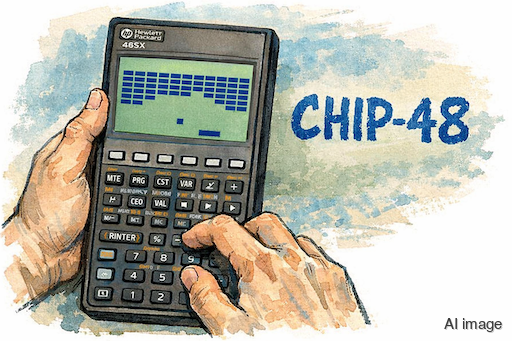
This is still work in progress, the pages for all but CHIP-8 are still far from done, until the main structure of the CHIP-8 reference is in place. The others should follow that same structure, so writing them in parallel would be annoying on any structural rework.
To still be helpful, a TLDR with the differences to CHIP-8 is already present.
TLDR: What is Different to CHIP-8? #
Okay, you know CHIP-8, but what’s different about CHIP-48? Here are the differences collected at one place:
- Memory is 4k as on CHIP-8, but allows for 3583 bytes as the max size of a program (theoretically 3584 should fit, but it would crash).
- Framerate is 64 Hz instead of 60 Hz.
- An adequate IPF rate is 15 instructions per frame.
- The display of the calculator is 131×64 pixels, so the 64×32 display of the interpreter screen is drawn as 2×2 LCD pixels per CHIP-8 pixel
- There is a display wait.
8xy1/8xy2/8xy3do not resetVFbut leave it unchanged.8xy6/8xyEare only useVx, so they doVx >>= 1/Vx <<= 1instead ofVx = Vy >> 1/Vx = Vy << 1andyis ignored.Bmmmhere isBxkkand jumps toxkk + Vx, so thexnibble doubles as part of the 12 bit address and an index for the register to add.- Incrementing
Iabove0xFFFwithFx1Eends the interpreter. Fx55/Fx65incrementIbyxinstead ofx+1.
Generic CHIP-48 emulation does not need to render the screen in 2x2 pixels, it is just an artifact of the calculator platform.
Regular Font Data (4x5) #
The font of CHIP-48 is at address 0x0000 and made of this patterns:
It’s made up of these 16 characters:
The data for easy use in an emulator:
    0xF0, 0x90, 0x90, 0x90, 0xF0,  // 0
    0x20, 0x60, 0x20, 0x20, 0x70,  // 1
    0xF0, 0x10, 0xF0, 0x80, 0xF0,  // 2
    0xF0, 0x10, 0xF0, 0x10, 0xF0,  // 3
    0x90, 0x90, 0xF0, 0x10, 0x10,  // 4
    0xF0, 0x80, 0xF0, 0x10, 0xF0,  // 5
    0xF0, 0x80, 0xF0, 0x90, 0xF0,  // 6
    0xF0, 0x10, 0x20, 0x40, 0x40,  // 7
    0xF0, 0x90, 0xF0, 0x90, 0xF0,  // 8
    0xF0, 0x90, 0xF0, 0x10, 0xF0,  // 9
    0xF0, 0x90, 0xF0, 0x90, 0x90,  // A
    0xE0, 0x90, 0xE0, 0x90, 0xE0,  // B
    0xF0, 0x80, 0x80, 0x80, 0xF0,  // C
    0xE0, 0x90, 0x90, 0x90, 0xE0,  // D
    0xF0, 0x80, 0xF0, 0x80, 0xF0,  // E
    0xF0, 0x80, 0xF0, 0x80, 0x80   // F